
Quick answer
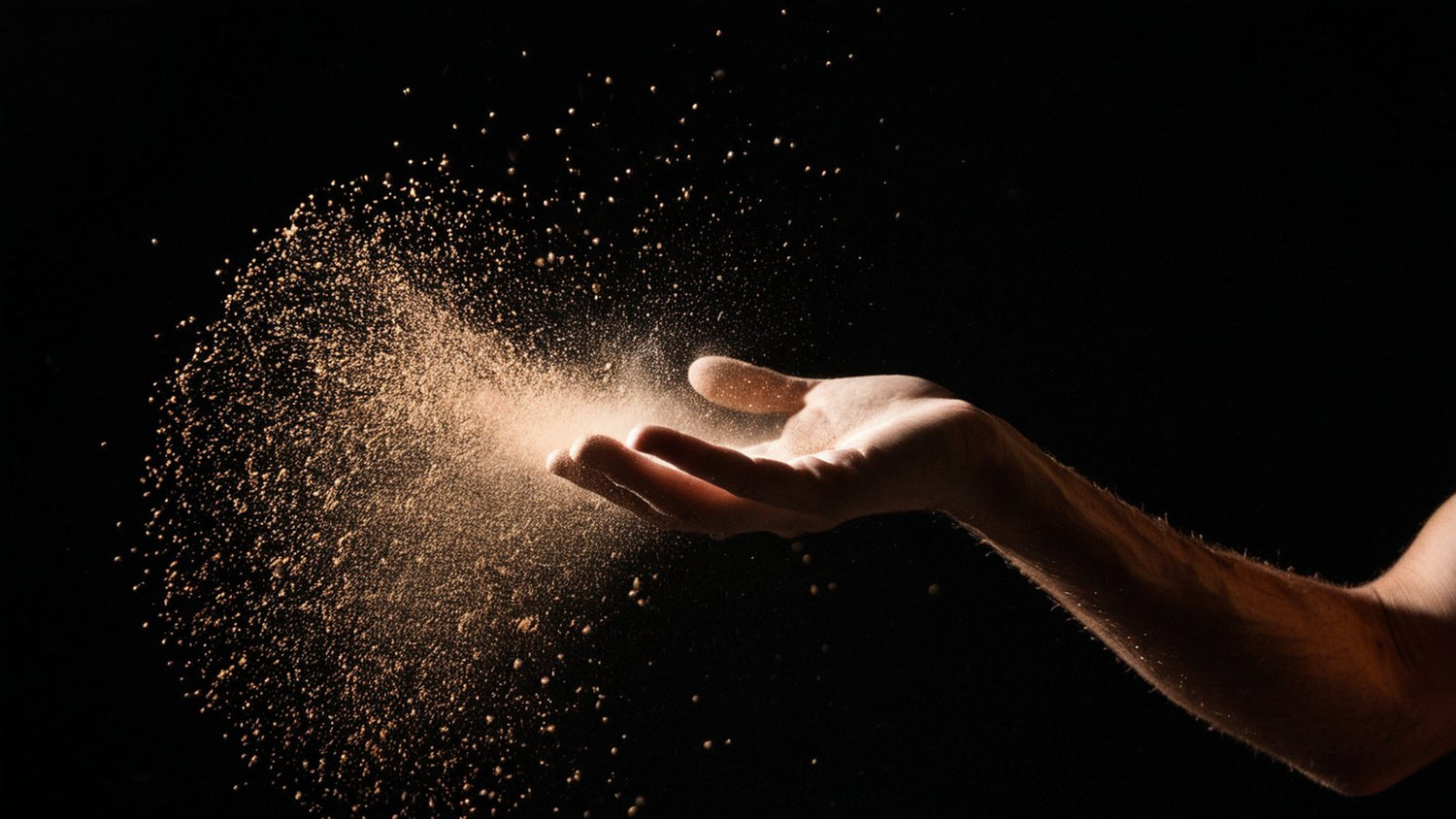
Texture powder is a fine, silica-based styling powder you sprinkle onto dry hair to add instant volume, grip, and a matte finish — no shine, no weight. You shake a small amount onto the roots of the top section of your hair, work it in with your fingers, and style. It's the right product if your hair tends to fall flat, if you wear a textured crop or a quiff, or if you want matte separation rather than a sculpted hold. It's the wrong product if you want high-shine sculpted styling — that's a pomade job — or if you have very dry hair that doesn't need additional oil absorption.
Texture powder is one of the most under-explained products in the men's grooming aisle. Most guys see the small jar with the shaker top and assume it's some kind of dry shampoo, or skip it entirely because they don't know what problem it solves. That's a missed opportunity. Used correctly, texture powder transforms hair in a way no other styling product can — it adds volume to fine hair, lift to flat hair, and matte texture to anyone who wants their style to look effortful but not effortful-on-purpose.
Here's the full breakdown. What it actually is, what it does to your hair on a physical level, who it works for, how to use it without making a mess, and how it compares to the other products in the styling lineup.
What texture powder actually is
Texture powder is a fine, dry powder — usually silica-based — packaged in a small jar or shaker bottle. The ingredient list is typically short: silica or silica silylate as the active, plus a small amount of fragrance and sometimes a starch or mineral additive. It has no oil, no water, no waxes, and no resins. That's what separates it from every other product in the styling category.
Silica silylate is the workhorse ingredient. It's a treated form of silica — essentially the same compound that's in beach sand and quartz — engineered into a particle size and surface chemistry that gives it two specific properties. First, it absorbs surface oil from the hair shaft, which is what removes weight from the roots and lets the hair lift. Second, it creates friction between hair strands, which is what produces the matte, gritty texture and the grip that lets the style hold its shape.
The product is invisible once worked in. Properly applied, you should not see white powder in your hair — the silica disappears into the hair shaft, leaving only the volume and texture effects behind. If you can see the powder, you used too much.
What texture powder does to your hair (on a physical level)
The product works in two ways simultaneously.
It absorbs oil at the roots. The natural oils your scalp produces (sebum) coat the base of every hair, and on most men's hair, that coating is what makes the hair sit flat against the scalp. The hair physically weighs more at the root, so gravity wins. Silica absorbs that surface oil on contact, and once the oil is gone, the hair loses its weight and naturally springs up. This is why you can take flat hair to a styled, lifted look in 30 seconds with no blow dryer.
It increases friction between hair strands. Clean, oil-free hair is also slippery hair. The silica particles wedge between strands and create a microscopic gritty texture that makes strands grab each other. That grip is what holds a textured style in place — it's mechanical hold, not chemical hold. A clay or pomade locks the style in place by forming a film over the hair. Texture powder locks it in place by making the hair strands stick to each other.
The combination is what no other product replicates. Pomade gives you hold but not lift. Clay gives you matte but adds weight. Dry shampoo gives you oil absorption but not styling grip. Texture powder gives you all of it in one product with essentially zero weight.
Who should use texture powder
Texture powder is not for everyone. It solves a specific set of problems extremely well, and it's the wrong tool for everything else.
The right candidates
- Fine or thinning hair. If your hair lacks natural volume — falls flat against your scalp, looks thinner than you'd like, sits limp after styling — texture powder is the highest-leverage product you can add to your routine. It does what no liquid or cream product can: it physically lifts the hair from the root.
- Medium-density hair that goes flat by midday. Lots of guys have hair that styles well in the morning and falls flat by 2pm. A pinch of texture powder mid-day, worked into the roots, brings the style back without re-washing or re-applying pomade.
- Anyone wearing a textured crop, quiff, fringe, or messy pompadour. These styles are defined by visible texture and movement — exactly what texture powder produces. The grip is what lets these looser styles hold shape.
- Guys who don't like the look of product in their hair. Pomade has visible shine. Hair cream sits on the surface. Clay can look heavy. Texture powder, applied correctly, leaves no visible product behind. The style looks like the way your hair naturally sits — only better.
The wrong candidates
- Guys wearing classic high-shine pompadours, slick-backs, or side parts. These styles need a sculpted hold and shine that only pomade or hair cream can deliver. Texture powder will give you a messy version of the same silhouette — wrong product for the goal. (Our companion guides on the pompadour and how to slick back hair are built around pomade and hair cream for this reason.)
- Very dry, brittle, or damaged hair. The powder absorbs oil, and dry hair doesn't have much to spare. Repeated use can dehydrate the hair shaft. If your hair is breaking, frizzing, or feeling straw-like, address that first with a proper wash routine before adding a powder to the mix.
- Coarse, naturally heavy hair. If your hair already has plenty of natural volume and weight, texture powder is unnecessary and can cause buildup. Stick with pomade or paste for sculpting and shine.
- Anyone going for a formal, polished look. Texture powder reads as casual and lived-in. For a wedding, an interview, or any setting where you want hair that looks professionally styled, use a pomade or hair cream instead.
Texture powder vs other styling products
This is the question most guys are actually asking when they look up texture powder. Here's how it stacks up against the standard styling lineup.
| Product | Hold | Shine | Weight | Applied to | Best for |
|---|---|---|---|---|---|
| Texture powder | Light to medium (mechanical grip) | None — fully matte | Essentially none | Dry hair | Volume, lift, textured styles |
| Pomade (water-based) | Firm | Light to medium | Medium | Damp hair | Sculpted styles, pompadour, slick back |
| Hair cream | Light to medium | Matte to low | Light | Damp hair | Soft hold, natural finish |
| Clay | Firm | None to low | Heavy | Damp or dry hair | Textured crop, gritty matte styles |
| Paste | Medium | Low | Light to medium | Damp hair | Soft sculpted styles, medium hair |
| Wax | Firm, restylable | Medium to high | Medium to heavy | Damp or dry hair | Detail work, restylable shine |
The cleanest way to think about it: pomade and hair cream sculpt; clay and paste hold; texture powder lifts. They're solving different problems. The right answer for any given style is often a combination — a pomade base with a powder finish for a high-lift pompadour, for instance — rather than picking just one.
For a deeper look at how pomade compares to wax specifically, our companion guide on pomade vs wax walks through both products in detail.
And for the full side-by-side on every firm styling product, our texture powder vs pomade vs paste vs clay guide breaks all four down.
How to apply texture powder
This is where most guys go wrong. The application technique matters more with this product than with most.
- Start with dry hair. Texture powder is the only major styling product that should never go on damp hair. Damp hair clumps the powder, leaves visible white residue, and turns the product gummy on contact. Hair must be fully dry before any powder touches it.
- Pour a small amount into your palm. Half a quarter-teaspoon is plenty for most heads. The shaker top on most jars makes it tempting to dump more — resist. If the product is in a jar without a shaker, tip a small pile into your palm and rub your palms together briefly to distribute.
- Apply directly to the roots of the top section. Massage the powder into the scalp and roots of the top section of your hair — the part you want to lift. Avoid the sides and back; you don't need volume there, and the powder is wasted.
- Work it in with your fingers. Twenty seconds of finger-massaging through the roots is all it takes. The powder disappears as it's worked in.
- Style with fingers or a comb. Texture powder is best styled by hand for that lived-in, hand-tousled look. If you want more shape, a wide-tooth comb works; fine-tooth combs will pull the powder down to the mid-shafts and dull the lift.
- Don't re-touch your hair excessively. The grip in texture powder weakens with repeated handling. Style it once, leave it alone. If you need to refresh mid-day, a small additional pinch is fine.
The first few times you use texture powder, you'll probably use too much. That's normal. Half of what you think you need is almost always the right amount. The product builds up fast and once you've applied too much, the only fix is a wash.
Common mistakes
- Applying to damp hair. Wait until hair is fully dry. This is the single biggest mistake.
- Using too much. Less than you think. The shaker top is generous; your hair doesn't need that much.
- Applying everywhere instead of at the roots. Powder on the mid-lengths and ends does nothing useful. Concentrate at the roots of the top section, where the lift is generated.
- Combining with too much other product. A pomade base plus texture powder is fine. A clay plus a pomade plus a powder is overkill and will look gummy. Pick one base product and use the powder as an accent.
- Not washing it out. The product is designed to wash out cleanly with normal shampoo, but it needs to be washed out. Going a week between washes while using powder daily creates buildup at the scalp.
- Using it on the wrong hair type. If your hair is already heavy and full, texture powder is unnecessary. If your hair is dry and brittle, it'll make things worse. Match the product to the hair.
Where texture powder fits into a men's grooming routine
For most guys who'd benefit from it, texture powder is a mid-day or pre-style tool, not a daily-shower-routine product. The flow looks like this:
- Wash with shampoo and conditioner two to four times a week. Don't over-wash; natural oils have a purpose.
- Towel dry and style with your primary product on damp hair — usually a water-based pomade or matte hair cream for most classic men's styles.
- Let it set for a few minutes, then apply texture powder as a finishing touch for volume and matte grip, if your style calls for it.
- Touch up mid-day with a fingertip-pinch of powder if your style starts to fall. No re-wetting, no re-applying base product.
For a textured crop, a quiff, or a messy modern pompadour, texture powder may even be the only product you need. For classic high-hold styles, treat it as a finisher, not the foundation.
A note on Outlaws & Gents and texture powder
Outlaws & Gents does not currently sell a texture powder. It's a category we've looked at — there's a real product story to tell, and the men's styling lineup we already make would integrate with one cleanly — but it isn't on our roadmap as a committed launch today. We'll write the guide for the category either way, because the question of whether texture powder belongs in a man's styling kit doesn't depend on whether we sell one.
If you're trying to decide whether the category fits your routine at all, the test is simple: does your hair fall flat by midday? Do you want more volume and movement than your current pomade or cream is giving you? Are you wearing a textured crop or a casual style and finding it doesn't hold? If yes to any of those, the category is worth trying with a small-jar trial from a reputable men's grooming brand.
Our recommendation
For most men reading this:
- If you wear a classic high-hold style (pompadour, slick back, side part), stick with our water-based hair pomade or matte hair cream as your foundation. You don't need a powder.
- If you wear a textured crop, quiff, or messy modern style, a texture powder is the highest-leverage addition you can make to your styling kit. Start with a small jar from a reputable brand, use sparingly, and see how it feels for two weeks.
- If your hair falls flat by 2pm regardless of what you use, the powder is worth a try. A quarter-teaspoon at the roots in the early afternoon brings the style back without any other product.
- If your hair is dry, brittle, or breaking, fix the underlying condition first. A texture powder will make a dry-hair problem worse, not better.
Browse the full hair care collection for everything we currently make on the styling side. This guide is here whether you eventually pick up a texture powder from us or from someone else — the goal is making sure you know what the category does before you spend money on it.
Unruly by nature. Refined by choice.


Leave a comment
All comments are moderated before being published.
This site is protected by hCaptcha and the hCaptcha Privacy Policy and Terms of Service apply.