
Quick answer
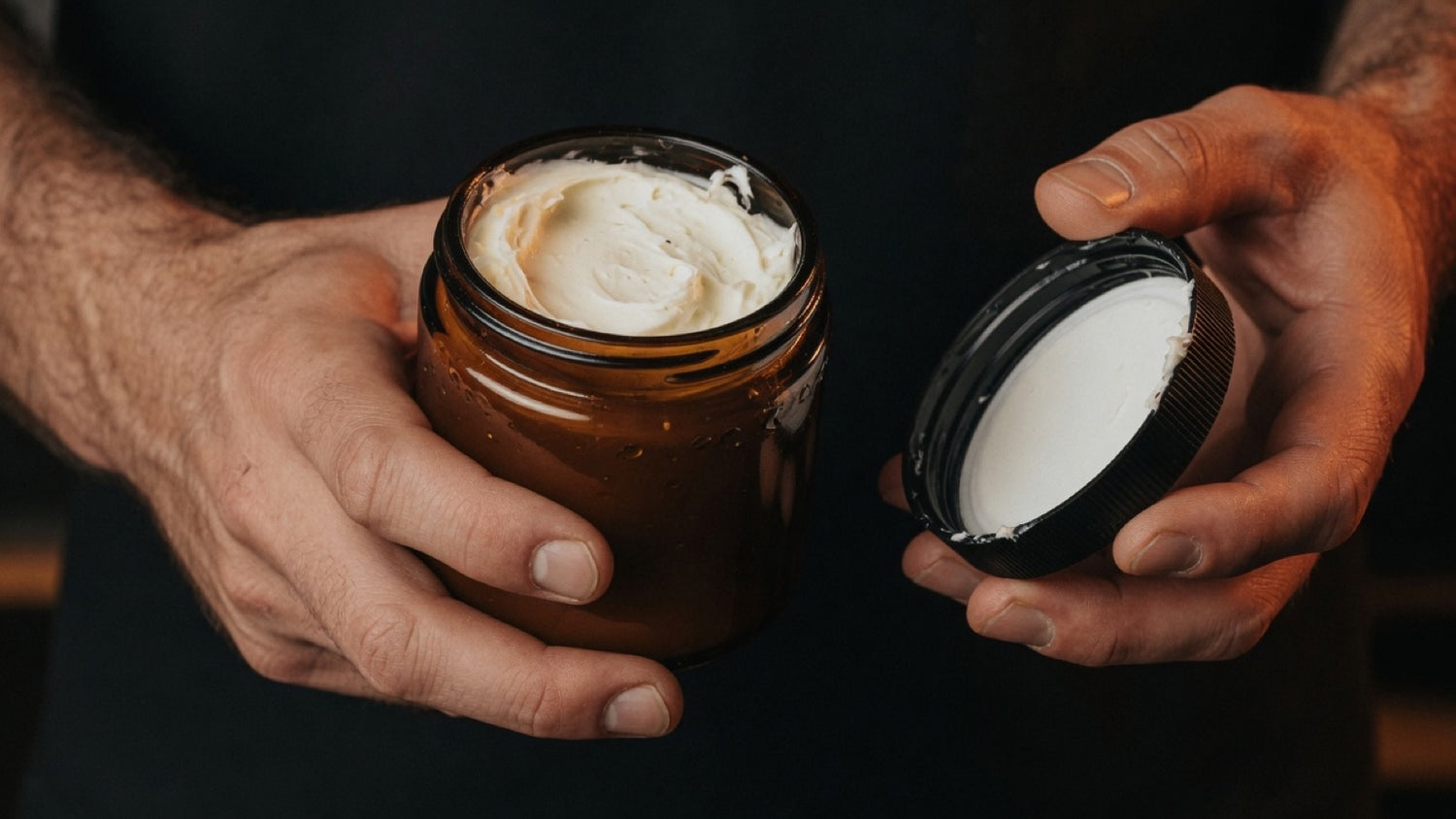
Beard butter isn't just for beards. A quality beard butter — built around shea butter, mango butter, and hemp seed butter — is one of the most effective men's skin moisturizers on the market. The same heavy butter content that conditions a beard for 6-8 hours conditions the skin underneath it just as long. Use it on dry skin patches, healed tattoos, elbows, knees, and post-shower body skin. Two to four times a week is enough for most men.
If beard oil is the lightweight daily skin conditioner most men should be using on their forearms, beard butter is the heavier option — the one you reach for when oil alone isn't getting the job done. Dry-skin patches that won't quit. Healed tattoos that need their ink color preserved. Elbows and knees in winter. The kind of weather-cracked skin that hits in February and won't let go.
Most men in this position go to the drugstore lotion aisle. That's the wrong shelf. The right product is the one already sitting in the beard-care aisle — and it's a better skin conditioner than 80% of what's sold as "men's body moisturizer." Here's why.
What's actually in a quality beard butter
Open up our Outlaws & Gents Beard & Body Butter and you'll find a short ingredient list dominated by three natural butters:
- Shea butter. Raw, unrefined. The most-studied skin-conditioning butter in personal care. Rich in vitamins A, E, and F. Provides deep moisturizing without occluding the skin or sitting on top. It's used in everything from premium men's skin care to professional dermatology recommendations for dry-skin conditions.
- Mango butter. The lighter complement to shea. Faster absorption, vitamins A and C, a smoother feel on the skin. Where shea provides the deep conditioning, mango provides the workable texture that makes the product feel good rather than waxy.
- Hemp seed butter. The secret weapon of the formulation. Hemp seed butter is rich in omega-3 and omega-6 fatty acids that match the natural lipid profile of healthy human skin. Unlike most moisturizers that sit on the skin, hemp seed butter actually helps the skin rebuild its own barrier function. It's the ingredient that makes the difference between a moisturizer that masks the problem and one that fixes it.
To that butter base we add the same premium carrier oils that anchor our beard oil — argan, sweet almond, and meadowfoam seed — and natural beeswax for stability and a thin protective seal. Essential oils provide the scent profile.
Compare that ingredient list to a $30 drugstore men's moisturizer. The drugstore version is 70-85% water, plus glycerin, plus synthetic emulsifiers, plus a small percentage of butters and oils sitting at the bottom of the list. The beard butter is the inverse — high concentration of active conditioning ingredients with no water filler. Every gram is doing work.
Why the butter base outperforms lotion
The fundamental difference between a butter-based moisturizer and a lotion-based one comes down to how each delivers its active ingredients.
A lotion is a water-and-oil emulsion. Most of the volume is water. The water evaporates quickly after application, leaving behind the small percentage of conditioning oils. That feels like fast absorption — and it is — but the conditioning effect only lasts as long as those residual oils stay on the skin, which is typically two to four hours.
A butter-based product doesn't have water to lose. The shea, mango, and hemp seed butters apply directly to the skin and stay there, slowly absorbing over several hours. The skin gets active conditioning the whole time. A single application provides 6 to 8 hours of moisturizing — twice or three times what a lotion delivers.
This is why butters work better for stubborn dry-skin areas. The skin needs sustained conditioning, not a quick hit. Elbows, knees, the back of the hands in winter, the skin around healed tattoos — these areas need a moisturizer that doesn't disappear in two hours.
Where beard butter outperforms dedicated skin moisturizers
Stubborn dry-skin patches
The skin on elbows and knees is thicker and dries out faster than the rest of the body. Drugstore lotions evaporate before they finish their work. A small scoop of beard butter, warmed between your palms and worked into the skin, conditions the area for the rest of the day. Two or three applications a week is enough to soften the texture noticeably.
Post-shower body skin
The highest-leverage time to apply any moisturizer is within three minutes of toweling off, while pores are open and skin is still slightly damp. Beard butter applied at this moment locks in shower moisture and adds its own conditioning on top. For most men in dry climates, this single habit replaces an entire dedicated body care routine.
Tattooed skin (long-term maintenance)
Healed tattoos look their best when the surrounding skin is well-conditioned. Dry skin makes tattoos appear faded and dull; well-moisturized skin showcases ink at full saturation. Beard butter applied 2-3 times weekly to tattooed areas does this job better than most dedicated tattoo aftercare products. The shea, mango, and hemp seed butter combination is specifically positioned to preserve ink color. (For fresh tattoos in the first 2 weeks, follow your artist's specific protocol — see our tattoo aftercare guide.)
Hands and cuticles (overnight treatment)
If you work with your hands or live in a dry climate, the back of the hands and the cuticles take a daily beating. A small amount of beard butter applied before bed and left overnight is one of the most effective hand treatments available — better than most "intensive hand cream" products at three times the price.
Beard hair and the skin underneath
The original use case, still excellent. Worked into a longer beard, the butter conditions both the hair shaft and the skin underneath simultaneously. The skin gets the sustained moisture that prevents itch and beardruff. The hair gets the conditioning that softens the wire-like texture coarse beards develop without care.
When to use beard butter vs beard oil
Beard oil and beard butter aren't competitors — they're complements. Our companion piece on beard oil as men's skin moisturizer covers the lightweight side of the equation. Quick comparison for skin-care use specifically:
| Need | Reach for |
|---|---|
| Daily skin conditioning, forearms, hands | Beard oil |
| Stubborn dry skin, elbows, knees | Beard butter |
| Healed tattoo maintenance (long-term) | Beard butter |
| Post-shower full body | Either works; butter for deeper need |
| Winter dry-skin season | Beard butter |
| Quick scent-light morning routine | Beard oil |
| Overnight hand and cuticle treatment | Beard butter |
Most men end up using both. Oil for everyday, fast-absorbing conditioning. Butter for the deeper jobs and the specific problem areas. One bottle, one jar. That's the full kit.
How to apply beard butter as a skin moisturizer
- Apply within 3 minutes of toweling off. Damp skin absorbs butter far better than fully dry skin. The post-shower window is the highest-leverage time of day for any moisturizer.
- Warm between your palms. Critical step. Cold butter doesn't spread evenly. Scoop a fingernail-sized amount and rub between your palms until the butter fully liquefies. You should feel the wax content melt — that's when it's ready to apply.
- Pat into the skin. Don't rub aggressively. Pat the butter onto target areas — forearms, hands, elbows, knees, tattoo zones, beard line — and let the warm-from-your-palms texture do the spreading. Light massage helps absorption.
- Use less than you think. Beard butter is dense. A fingernail-sized amount covers both forearms and the backs of both hands. Two fingernail scoops handles elbows, knees, and forearms. Start small and add only if needed.
- Wait 60-90 seconds before dressing. The butter needs a minute to absorb. Get dressed too fast and you'll transfer some of it to your shirt sleeves.
- Frequency depends on conditions. Two to four times weekly for most men. Daily in winter or for very dry skin. Once a week is plenty for healed tattoo maintenance.
The three scents and how to think about them
Our beard & body butter comes in three signature scents, each built on a carefully crafted fragrance-oil blend (the butter uses fragrance oils rather than the essential-oil blends on our beard oil and beard balm):
- Bourbon & Sandalwood. The broadest crowd-pleaser. Rich, sophisticated, slightly sweet but not feminine. Layers well under most colognes. The default pick if you're unsure.
- Cedar & Leather. Rugged, outdoorsy, classic masculine. The drier, more traditionally men's-club end of the three. Excellent on its own without cologne.
- Tobacco & Vanilla. The contrast play — smoky-and-sweet with depth. Reads as more dressed. Best for evening wear or as a scent foundation under a similarly profiled cologne.
All three are intentionally lightly scented. For skin-only application (no beard contact), each reads as understated by the two-hour mark. The scent is meant to be a foundation that sits underneath your cologne, not a fragrance announcement that competes with it.
Common mistakes
- Applying cold butter directly. Cold butter doesn't apply evenly. Always warm between your palms first.
- Using too much. The dense formulation means a little goes a long way. Heavy application leaves the skin shiny rather than absorbing properly.
- Applying to fully dry skin. Less effective than damp-skin application. Time your moisturizing around shower or wash routine.
- Expecting it to absorb in 30 seconds. Butter takes longer than lotion. Give it 60-90 seconds before dressing.
- Skipping a patch test if you have sensitive or acne-prone skin. The butters themselves are well-tolerated, but essential oils used for scent can sometimes trigger reactions in sensitive individuals.
- Using it on broken skin or open cuts. Wait until healed.
- Storing in extreme temperatures. Beard butter softens in heat and firms up in cold. Keep at room temperature. If it gets very firm in winter, a few seconds of palm-warming brings it back.
What about acne-prone or oily skin?
Beard butter is a heavier formulation. For men with chronically oily or acne-prone facial skin, daily face application probably isn't the right call. But that doesn't mean the product is off the table — it just means you target it differently:
- Apply to forearms, hands, elbows, knees, and tattoo zones. Skin in these areas isn't acne-prone and benefits from the deep conditioning.
- Use beard oil on the face instead. The lighter formulation works better for facial skin that doesn't need heavy moisture.
- Patch test before broader use. If you've reacted to scented skin care or essential oils before, do a 48-hour patch on the forearm.
Our recommendation
For most men adding beard butter to the routine as a skin moisturizer:
- Pick up one jar of Outlaws & Gents Beard & Body Butter in the scent that fits your daily wear (start with Bourbon & Sandalwood if unsure).
- Use it 2-3 times a week post-shower on forearms, elbows, knees, and any healed tattoo areas. That alone replaces a dedicated body moisturizer for most men.
- Keep beard oil on the counter for daily morning use — lighter, faster-absorbing, every-day conditioning.
- For longer beards, use both in the standard beard care routine: oil first, then balm (see our companion piece on beard balm vs beard oil).
The end state for most men is a three-product skin care lineup that costs less than a single bottle of department-store men's moisturizer and works dramatically better. Browse the full men's skin moisturizer and grooming collection for the products that anchor the routine.
One bottle. One jar. Real ingredients. Multi-use grooming the way it actually works.


Leave a comment
All comments are moderated before being published.
This site is protected by hCaptcha and the hCaptcha Privacy Policy and Terms of Service apply.